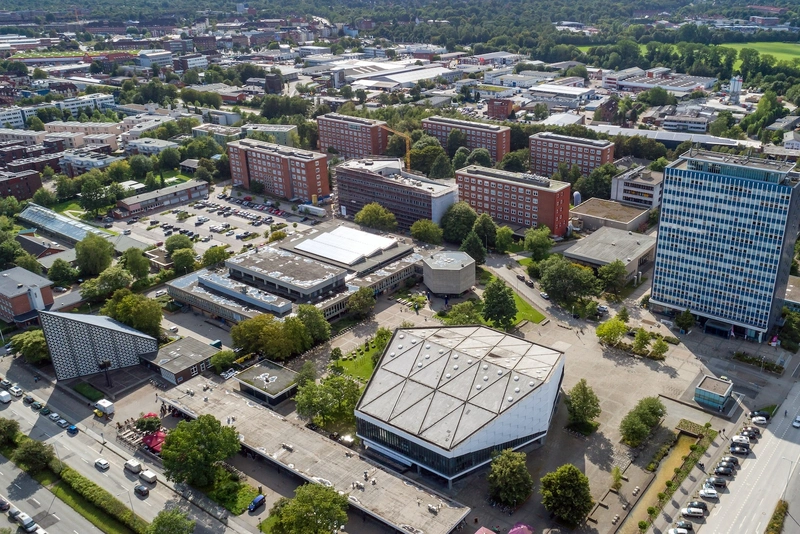
Christian-Albrechts-University of Kiel (CAU) is the only comprehensive university in Schleswig-Holstein. With approximately 25,000 students, it is one of the largest universities in northern Germany. Eight faculties, more than 190 degree programs, and internationally acclaimed research define the campus. Clusters of excellence and close collaborations with renowned research institutions underscore its scientific significance.
As the variety of faculties, institutes, research projects, and services grows, so do the demands on digital communication. The university was looking for a platform that would reliably guide a wide variety of target groups to the right information while also allowing each individual unit to maintain its own distinct online presence. Based on TYPO3, a central multisite platform was developed for this purpose, which continues to be expanded to this day.
Project Overview and Objectives
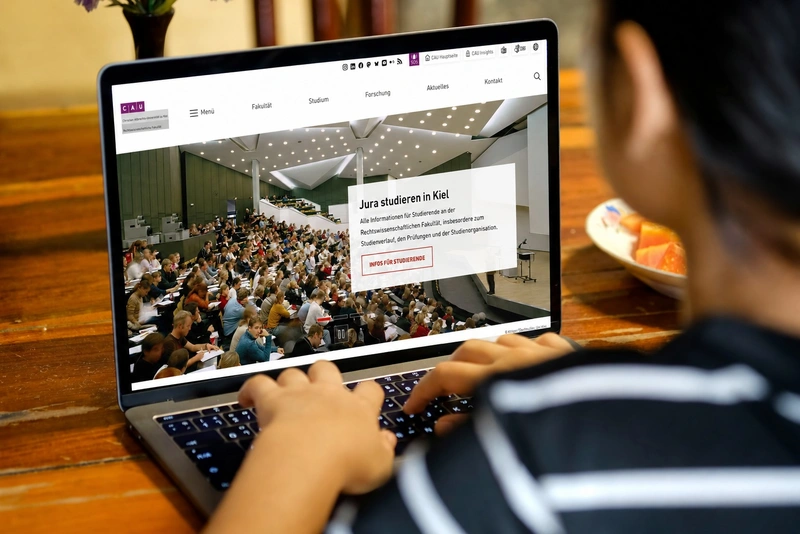
The new website was designed to clearly reflect the size and diversity of Kiel University while also meeting the varying needs of the faculties, institutes, and central departments. The goal was to create a user-friendly information architecture that provides guidance, facilitates access to content, and highlights the autonomy of the individual units.
The university’s new main website was initially created using TYPO3. The platform was then expanded into a multisite system that now unites numerous faculties, institutes, and microsites within a single system. Customizable design options, central components, and the integration of existing systems form the foundation for the ongoing expansion of the university’s digital platform.
Benefits for the University of Kiel
With the new TYPO3 platform, the University of Kiel has a central foundation for its digital presence. The main website, the faculties, the institutes, and the microsites follow a common concept but can manage their content independently and customize their design. This ensures that both brand recognition and organizational autonomy are maintained.
Navigation is also improved for students, prospective students, researchers, staff, and the general public. Clear navigation, an accessible design, and quick access to relevant information make it easier to find degree programs, research, events, and services. At the same time, the platform can be continuously expanded and adapted to new requirements.
Use Cases
A platform for many performances
The University of Kiel comprises eight faculties, numerous institutes, and other academic institutions, each of which has very different requirements for its digital presence. Instead of operating many independent websites, a central multisite platform based on TYPO3 was developed. This platform provides the technical framework for the main website as well as for the websites of the faculties, institutes, and topic-specific microsites.
All websites use shared templates and components but can be customized individually. Through their own color schemes, logos, navigation menus, and search functions, each unit can maintain its identity while remaining recognizable as part of the university. The system continues to grow: Numerous sections are already live, and additional faculties and institutes are being integrated step by step.
Navigating Complexity
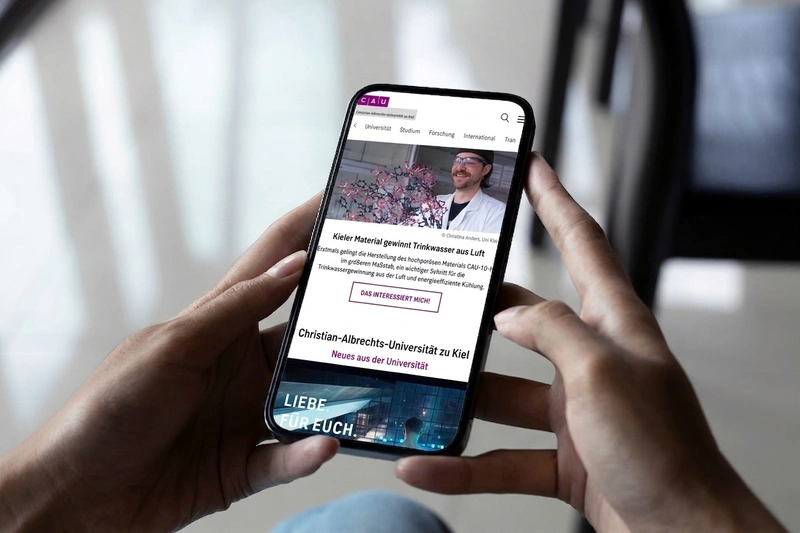
A university brings together an enormous variety of information: from degree programs and research projects to events and services. To enable users to quickly find what they’re looking for, the information architecture has been consistently tailored to their needs. Intuitive navigation, direct access points, and clearly structured content make it easy to find your way around.
The faculties also follow this principle. Shared structures ensure a familiar user experience, while individual color schemes and design elements highlight each faculty’s distinct identity. Combined with a responsive and accessible implementation in accordance with BITV 2.0, this has resulted in a digital platform that simplifies access to information for a wide variety of target groups—from prospective students to researchers.
Digitalization as a Process
A university is constantly evolving: new research projects emerge, academic programs change, and organizational structures grow to meet evolving demands. A digital platform must be able to keep pace with this dynamic environment. With the TYPO3 solution, Kiel University has a flexible foundation for a strong brand in higher education—one that evolves alongside the university and enables the long-term integration of new facilities and requirements.


![[Translate to English:]](/fileadmin/_processed_/d/7/csm_social_media_8ef6bf50e7.jpeg "[Translate to English:]")
![[Translate to English:]](/fileadmin/_processed_/a/2/csm_happy-path-student_8110a69895.jpg "[Translate to English:]")