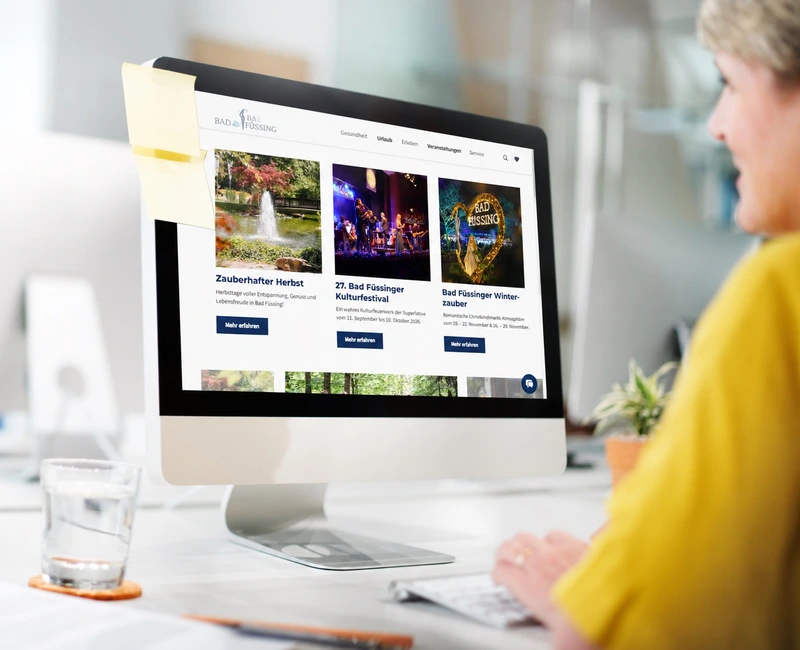
With more than two million overnight stays per year, Bad Füssing is one of Germany’s leading health and spa destinations. Its hot thermal springs, health services, and diverse recreational opportunities attract spa guests, wellness seekers, and active travelers alike. For many of them, the experience begins online—for example, when searching for accommodations, events, or suitable local offerings.
The Bad Füssing Spa & Guest Service is responsible for the destination’s tourism marketing and supports guests throughout their stay. The website brings together information on accommodations, thermal baths, events, leisure and wellness offerings, and other services. As a central digital point of contact, it supports guests from the initial inspiration through concrete travel planning to their stay on-site.
Project Overview and Objectives
The Bad Füssing Spa & Guest Service has overhauled its central tourism platform, both technically and conceptually. The existing Pimcore system was replaced with TYPO3 v13 LTS, and the website was developed entirely according to the “mobile-first” principle. Key objectives included intuitive user navigation, a high level of accessibility, and seamless integration with tourism systems, including Wintop for accommodation searches and Billetten/Xooom for event management and ticketing.
In parallel with the relaunch, key digital offerings were reintegrated and existing processes were further developed. Accommodation search, events, ticketing, and other services are seamlessly integrated within the platform. The technical foundation is complemented by features for multilingual support, AI-powered processes, and analytics. The result is an infrastructure that supports both guests and the editorial team’s day-to-day work.
More for Bad Füssing
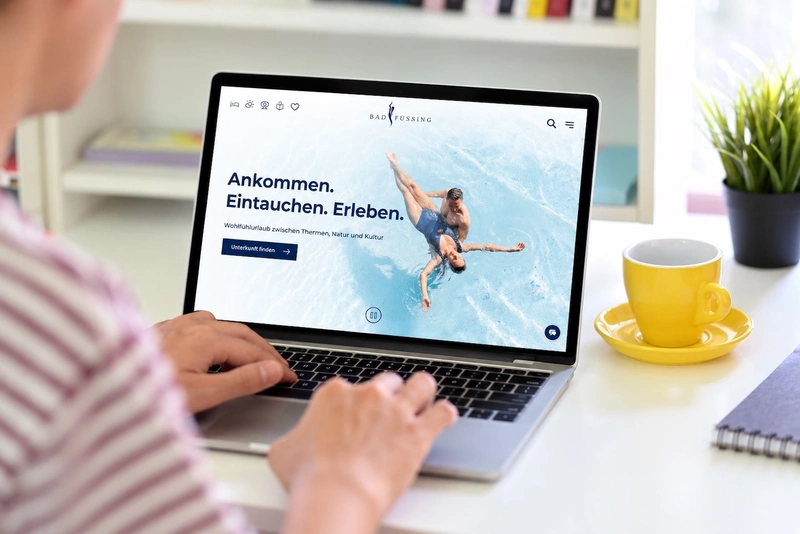
With this relaunch, Bad Füssing brings together the key stages of the digital guest journey on a single platform. Guests can search for and book accommodations, discover events, and purchase tickets directly—all without having to switch to external sites to complete these essential steps. The mobile-first design, multilingual support, and accessibility make it easier for diverse target groups to access the offerings and strengthen the spa town’s digital marketing.
The new platform also creates added value behind the scenes. DeepL supports translations directly in the backend, and AI-powered features streamline editorial tasks such as creating alt text. The open TYPO3 framework also provides room for additional services and integrations. With hosting, maintenance, consulting, and continuous development, the platform remains flexible in terms of both technology and content even after going live.
Use Cases
Accommodation search for mobile guests
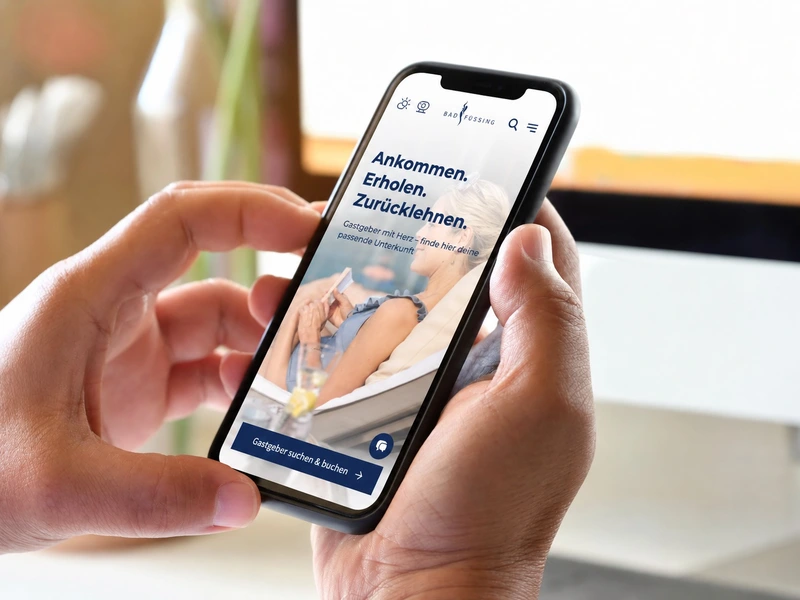
More than 60 percent of visitors already access the Bad Füssing website via mobile devices. Accordingly, the new platform was designed entirely around the “mobile-first” principle. A central component of the digital guest journey is the accommodation search with Wintop. Through this system, guests can search for hotels, vacation rentals, and camping options, including availability. The external booking widget has been fully integrated into the website’s design.
Instead of a simple embed, +Pluswerk developed its own pre-filters for categories, star ratings, amenities, and comfort partners, and integrated a wish list for favorite accommodations. Loading states, accordion behavior, and form handling have also been optimized for better usability. As a result, Wintop integrates seamlessly into the portal and supports guests from the search phase through to selecting a suitable accommodation.
From the event straight to the ticket
In conjunction with the relaunch, Bad Füssing introduced a new event management and ticketing system. To integrate this system—which is widely used in Scandinavia—+Pluswerk developed its own React component library. This library is available in TYPO3 as list and detail views and enables editorial pre-filtering by highlights, time periods, or categories. Event listings are also available in German, English, Czech, and Dutch.
A key feature is the seamless integration of information and booking: Guests search for events, open the detail view, and purchase tickets directly on the website via the embedded Billetten overlay, which includes a shopping cart. According to the available project information, this is the first known integration of Billetten into a TYPO3 system in Germany. Bad Füssing is thus taking on a pioneering technological role in connecting the two systems.
A Digital Foundation for the Future of Tourism
With this relaunch, Bad Füssing now has a digital infrastructure that goes far beyond a new website. Guests can find all key offerings and services in one place, while editorial staff and tourism partners benefit from integrated systems and more efficient workflows. As a result, the platform enhances the spa town’s digital visibility and creates better conditions for information, bookings, and service.
At the same time, the platform is designed for future development. New offerings, interfaces, and digital services can be flexibly added in the future, while hosting, maintenance, and consulting ensure long-term operation. This collaboration—extending beyond the go-live phase—thus lays the foundation for responding to new demands in tourism and gradually refining the digital guest journey.